
Heiziacher noodles
A traditional farmer's recipe

Homemade tastes best
It probably has to do with my childhood memories that my favorite bread even today is the traditional Tyrolean farmer's bread, as it was baked here long before the "Körnderlwelle". A bread that requires very few ingredients and yet tastes so delicious, especially with fresh farmer's butter on top. Just like I used to eat at our grandfather's mountain farm in Schmirn as a child.
I like my mother-in-law Hedwig's bread just as much, who fortunately still bakes regularly despite being 85 years old. After a few attempts to modernize her bread, for example by adding sunflower seeds or replacing the wheat flour with spelt flour, we kept telling her: "Grandma, please stick to your old recipe!"
Hedwig swears by "leavening" the day before, as this allows the yeast flavor to penetrate the flour well. In general, my mother-in-law believes that it is very important to take time to bake bread. So back to "leavening": To do this, put the flour in a large bowl the day before the baking day, make a well in the middle and put the yeast dissolved in a little lukewarm water in there. Cover the bowl with a cloth and leave it in a warm place overnight.
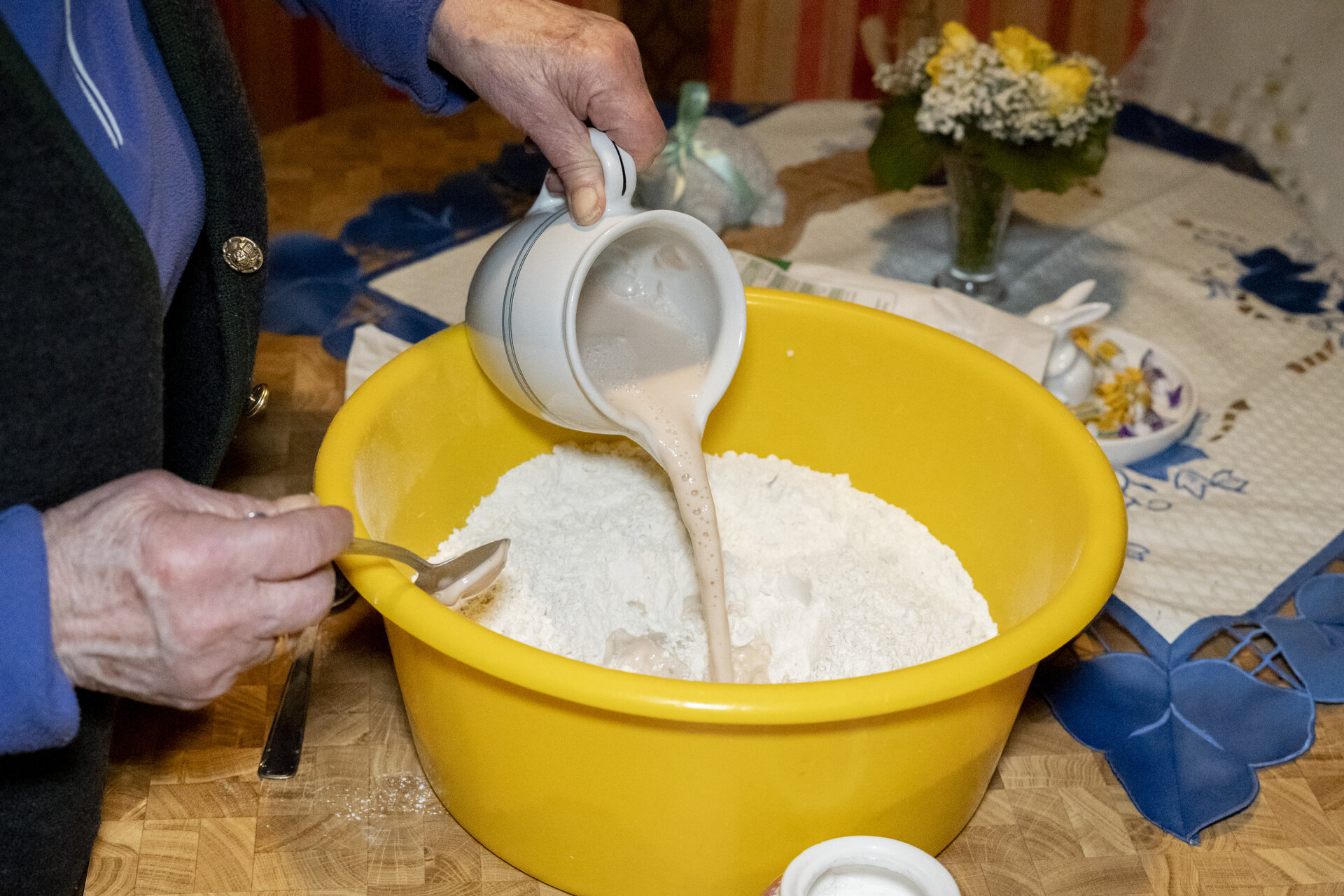
The next day is the most strenuous part of baking bread. Gradually, lukewarm water (and buttermilk if available - although Hedwig only uses farmhouse buttermilk) is added to the flour and steam, the dough is salted and refined with a little bread spice mix. Hedwig kneads the dough with her hands; she swears that this is the best way to get air into the yeast dough, which makes the bread particularly fluffy. She has her own technique and after about 10 minutes she has kneaded together a smooth bread dough, which then has to rest in a warm place for about 1 ½ to 2 hours.
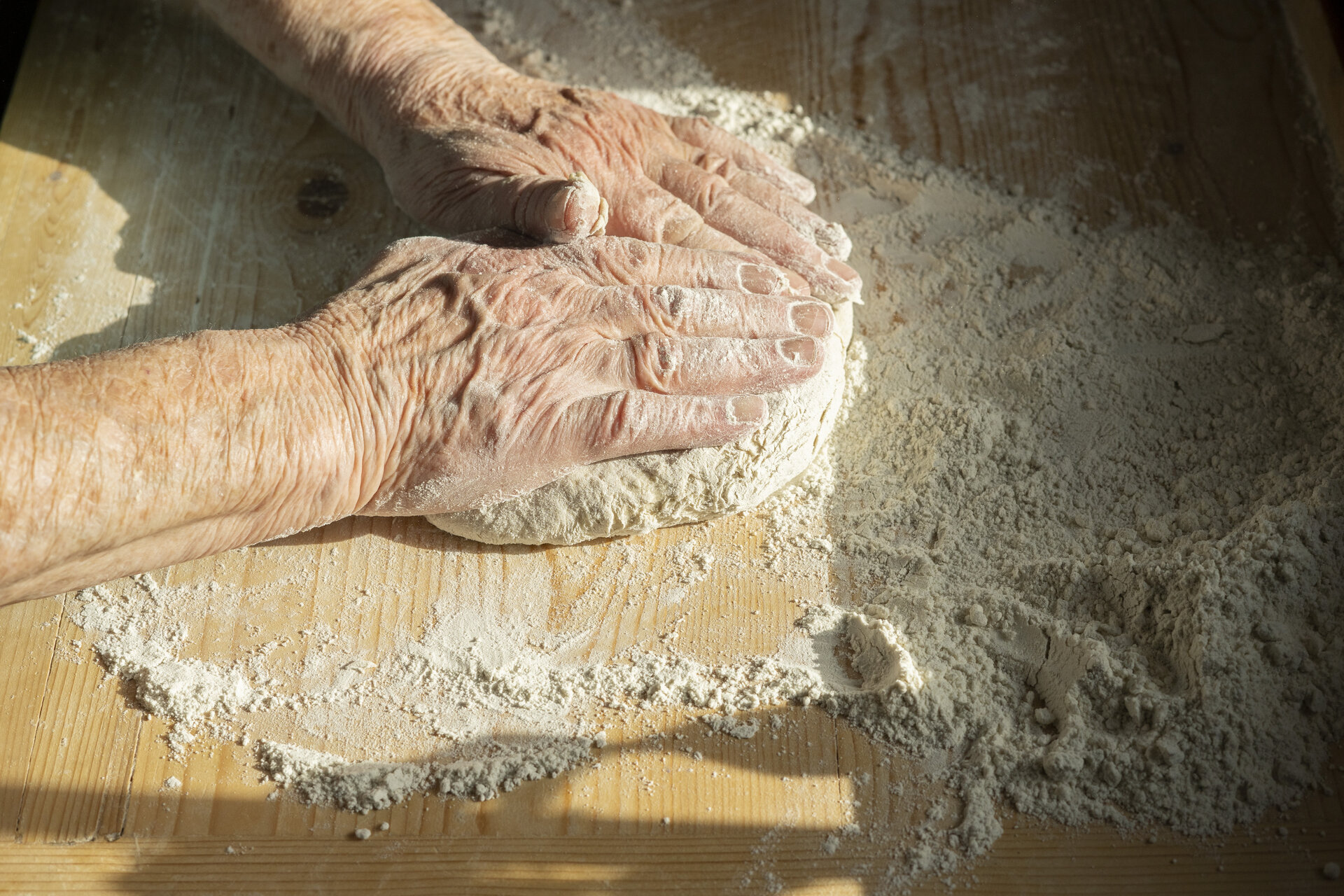
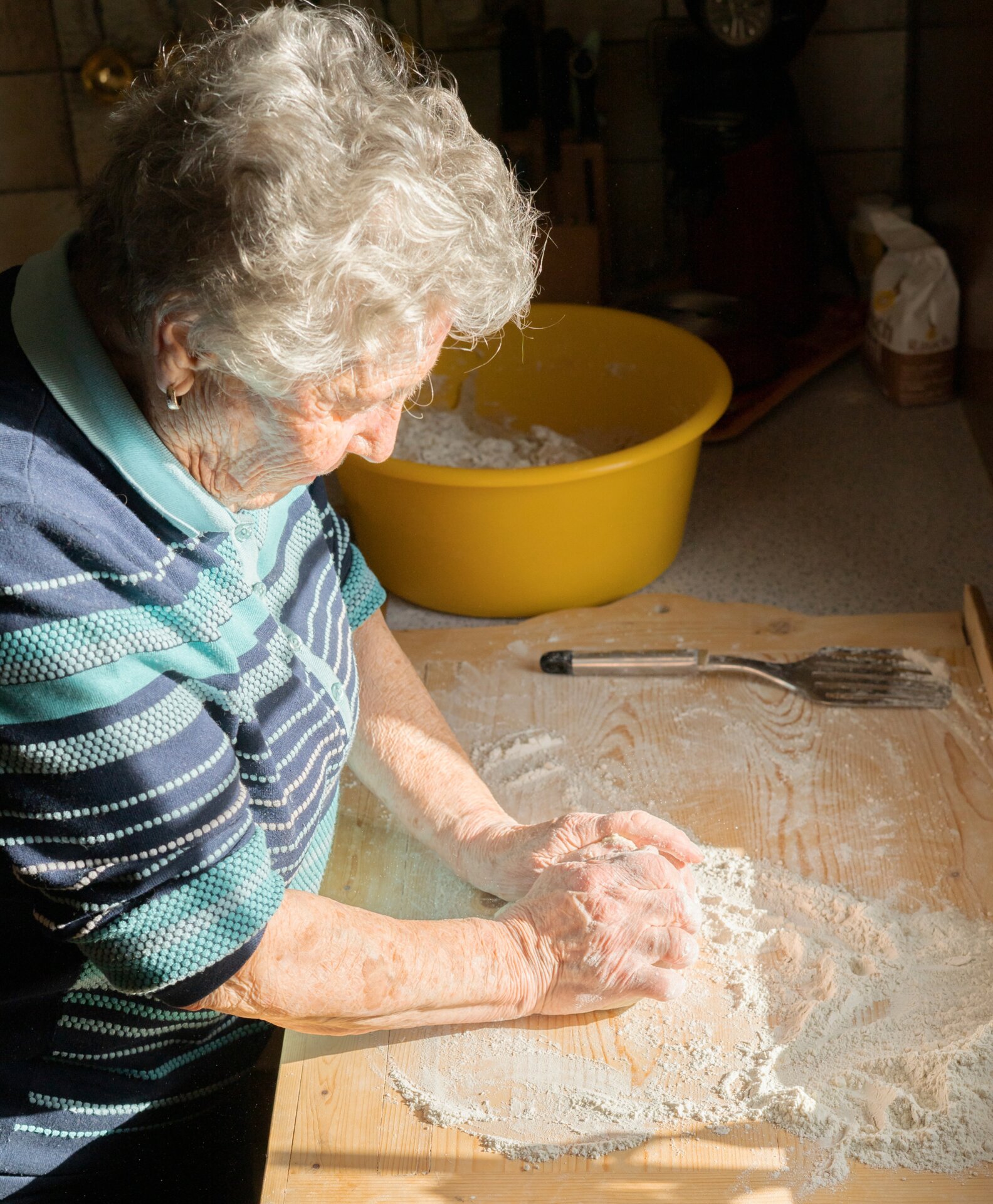
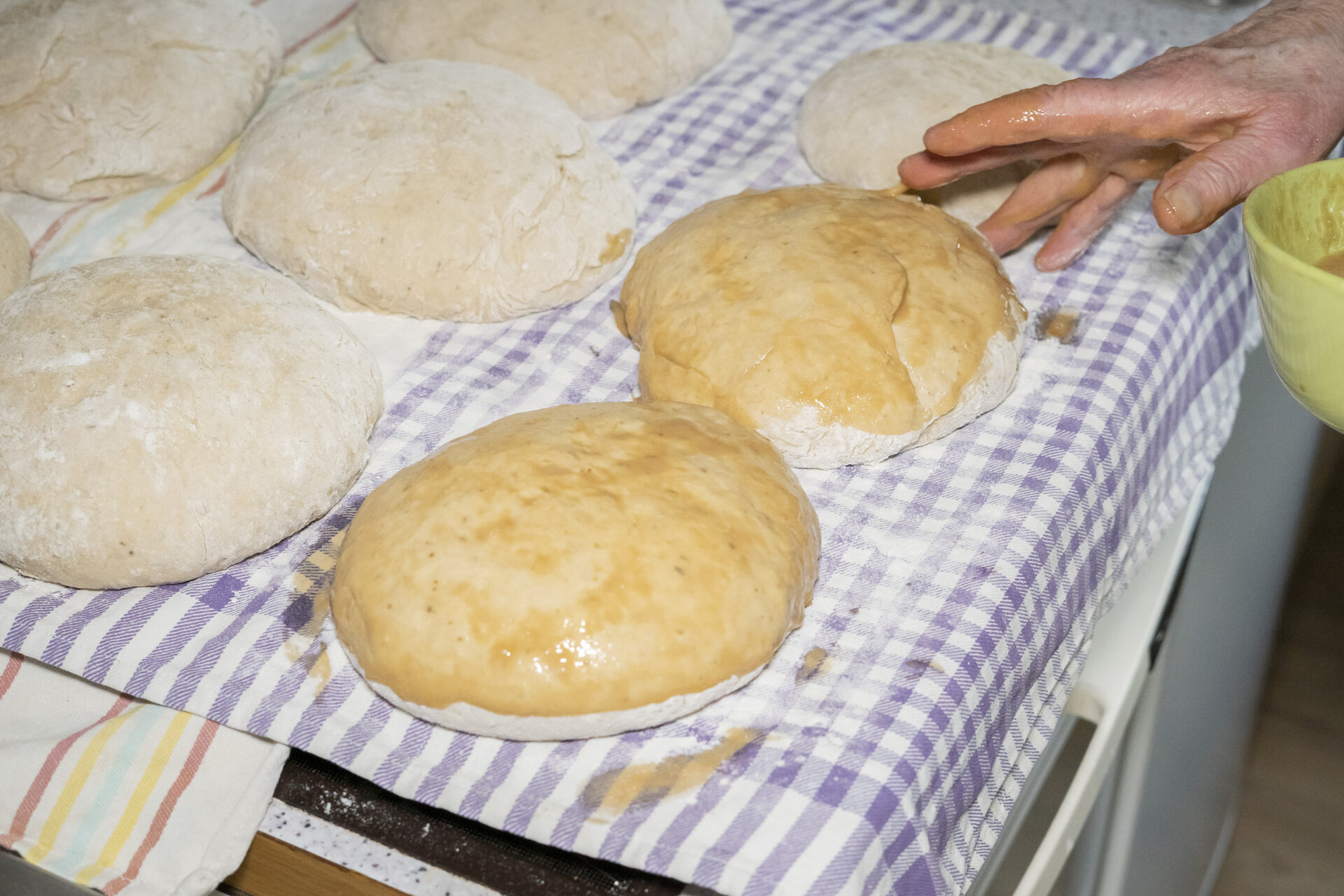
The dough is then kneaded well again to form plate-sized loaves. These are placed on a baking tray, where the loaves are left to rest for another 15 minutes. Now comes my mother-in-law's secret, which can be revealed here: the loaves are spread with a mixture of lukewarm coffee and egg before baking, which gives them a particularly beautiful color and a crispy crust.
Until a few years ago, bread was baked in our brick oven. However, as this involved a lot of effort, such as cleaning the ash before baking and dosing the wood precisely to achieve the right temperature, the bread is now only baked in an electric oven - there is of course a slight difference in taste, but this does not justify the extra effort.
The baking time in the electric oven is approximately one hour. Initially, the oven is heated to 220 degrees and after about 10 minutes Hedwig reduces the temperature to 180 degrees. The finished loaves are smeared with farmer's butter immediately after baking to give them a nice shine and, of course, for extra flavor.
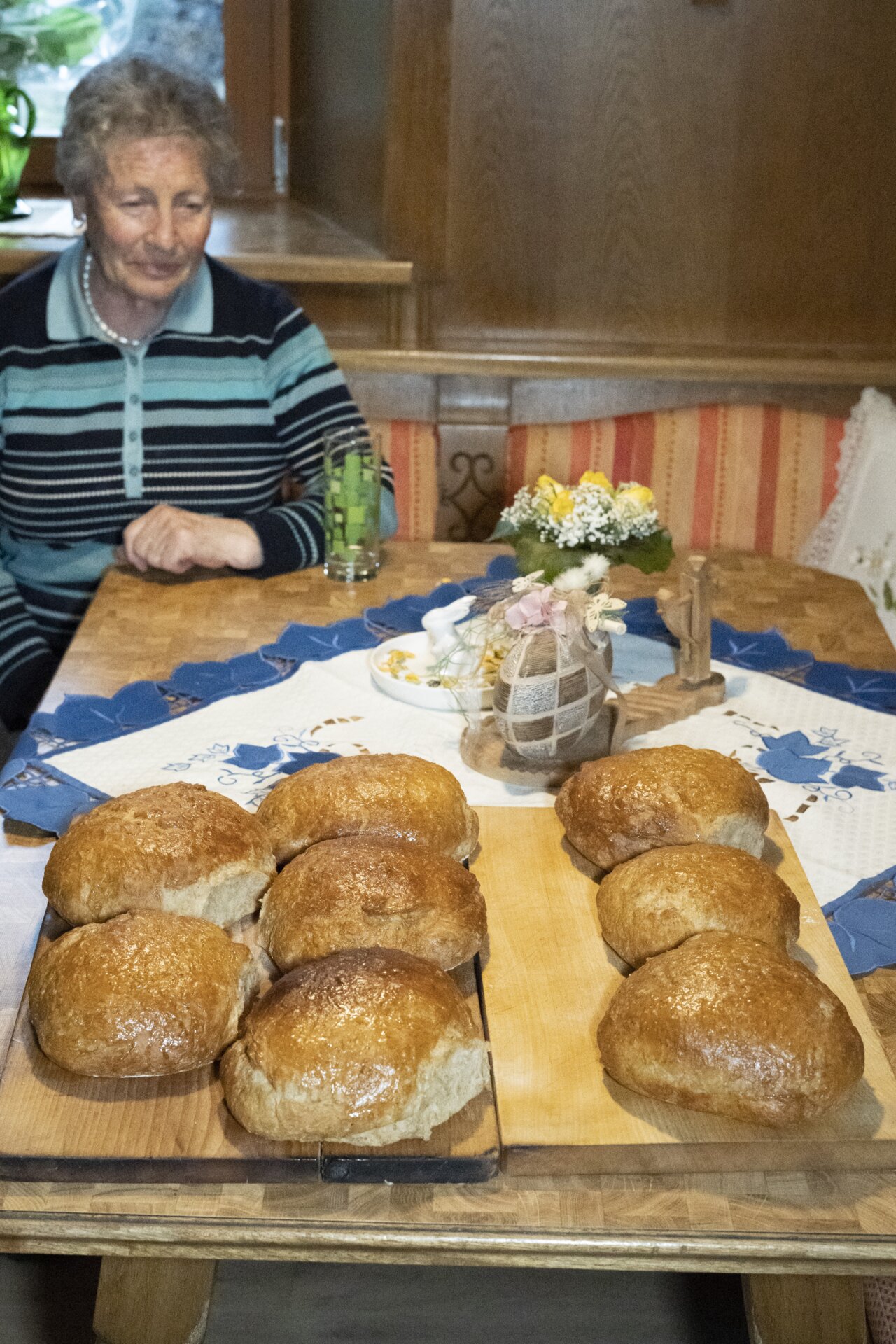
Baking bread in the mill village of Gschnitz:
Another tip from me if you have never baked bread before and would like to look over the shoulder of an experienced farmer's wife before trying it for the first time: In summer, farmer Angela Pranger bakes traditional farmhouse bread every Thursday morning in the mill village in the mountaineering village of Gschnitz, which you can also taste or buy afterwards.

