
Back when Hintertux was still part of Schmirn...
100 Years Since Hintertux's Separation from Schmirn—A Joint...

A traditional handicraft
Josef Fidler embroidered his first satchel in 1991. A lot of time has passed since then and Josef has perfected the art of satchel embroidery. He spends around 100 to 150 hours working on a unique handmade item.
But what is a satchel anyway? The neatly embroidered satchel belt is part of the traditional Wipptal men's costume alongside the lederhosen, the red gilet and the green bib. The motif embroidered on the satchel can vary between leaves, ornaments or even an eagle. The initials of the wearer and the year of manufacture are also usually embroidered.
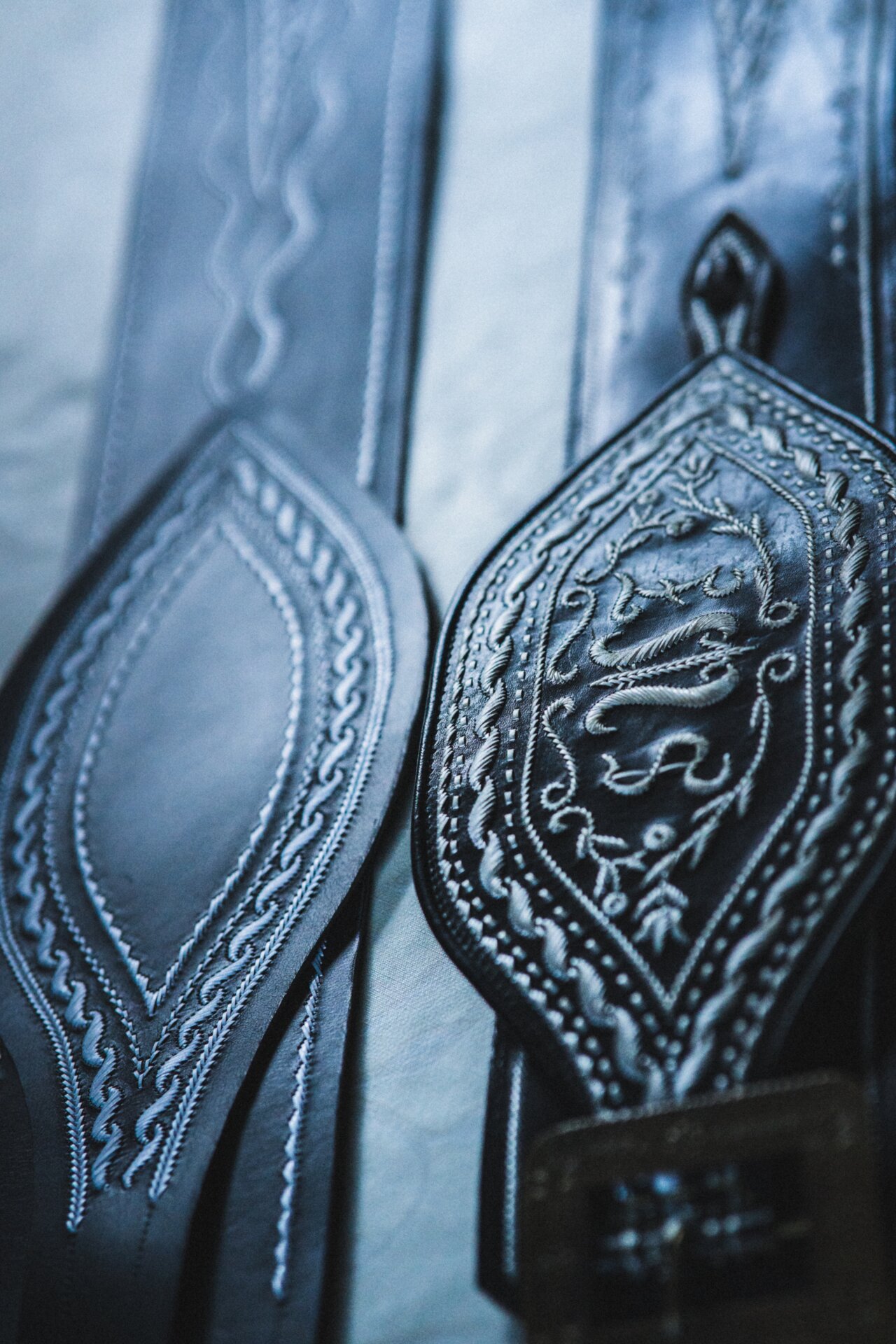
Embroidering satchels requires not only a steady hand, but also the materials used. Josef uses cowhide leather from Pill for his satchels, as this will grow back if the wrong hole is made. The embroidery depends on the wearer's wishes. The cowhide is either embroidered with peacock quills or with synthetic threads. The difference lies not only in the appearance but also in the finish. A quill is more delicate and not quite as white as its plastic counterpart. Quills are also only available in the natural length of the peacock feather. Josef needs approx. 150 quills for a satchel.
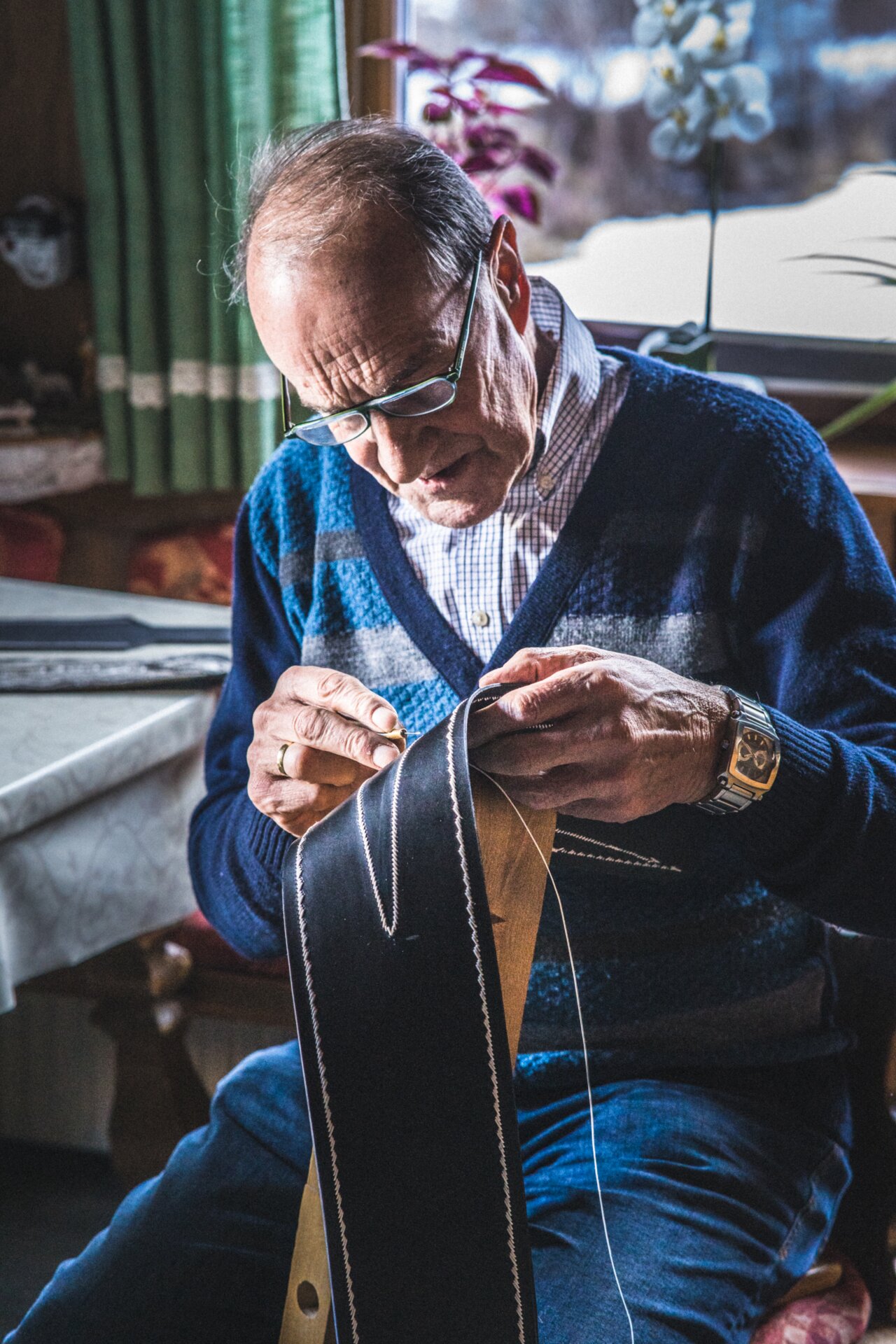
Josef always embroiders from 5:00 am to 6:30 am. He has set up a room in the attic especially for this purpose. For embroidering, he stretches the leather in a special device and then works without a needle. Josef uses a piercer to pull the tip of the quills or the plastic thread through the leather. He uses this to pierce the marked area and pushes the quill or plastic thread through the resulting hole.
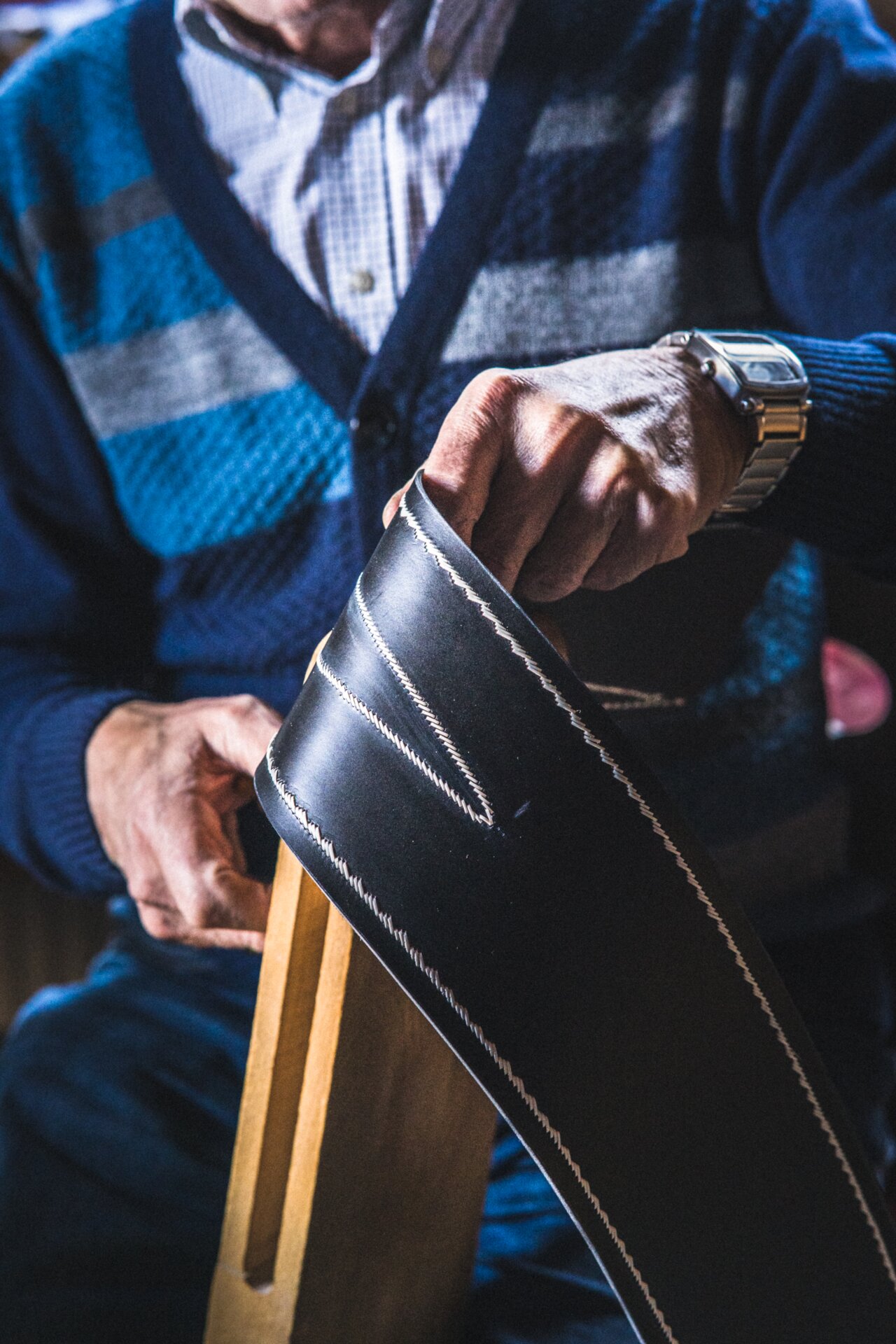
Once Josef is satisfied with the result, the last step for him is to finish the back of the satchel. The ends of the quills or plastic threads are worked in during embroidery, but are covered with a second leather at the end. Josef uses nappa leather for this, as it is a very thin leather that is not bulky.
As the four sons and the daughter of the Fidler family are all enthusiastic musicians, father Josef had a lot to do to make all his sons a matching satchel for the musicians' costume. Now it is the grandchildren who are following in their parents' footsteps and need a satchel for the traditional costume of the band.