Back when Hintertux was still part of Schmirn...
100 Years Since Hintertux's Separation from Schmirn—A Joint...

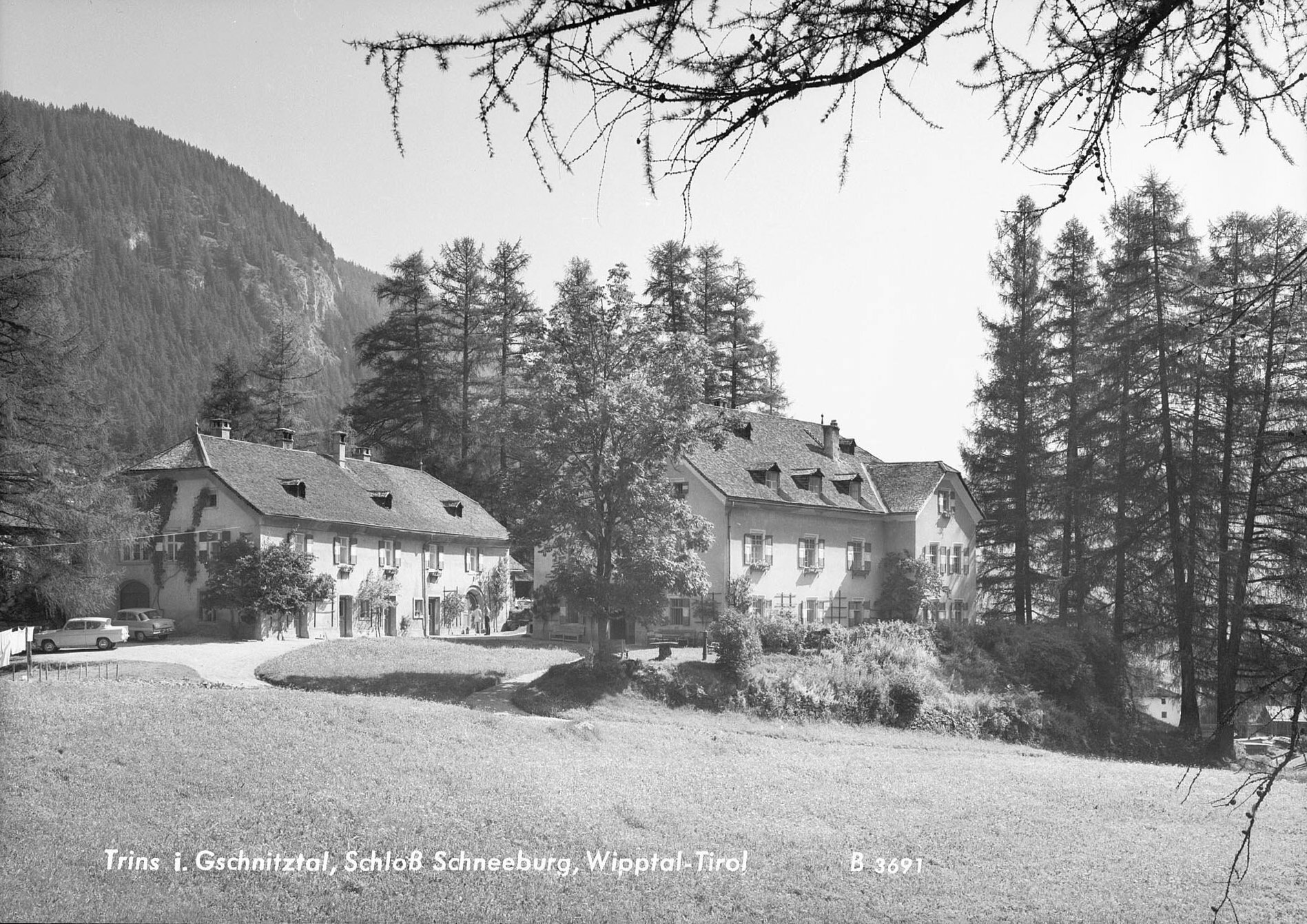
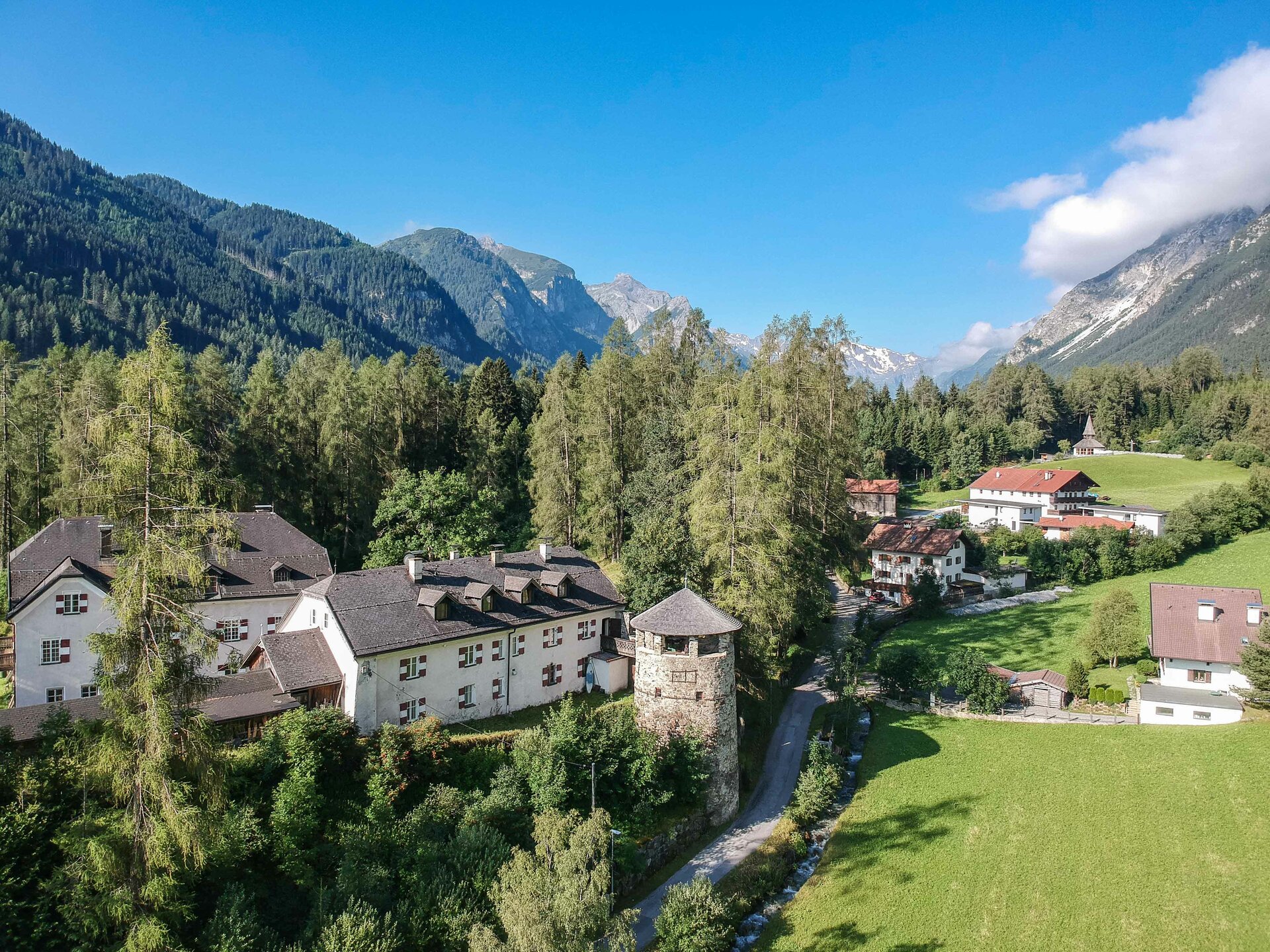
Schneeberg Castle (also known as Schneeburg Castle or Sarnthein Castle) is located on the Trins valley floor next to the Gschnitzbach stream, somewhat hidden on a wooded moraine hill. During a walk in spring along the "Unter'm Dorf" sun trail in the mountaineering village of Trins, you pass right by the castle walls and can take a closer look at the castle.
I have always wondered about the history behind the old walls and then did some research. The origins of the castle are unknown, but it was first mentioned in documents in 1297 as "Sneburg", where "Lazerus de Trüns" and his descendants had their seat for several decades. So the original castle is older than I thought - it's just a shame that more or less nothing is left of it today. Only parts of the defensive wall (up to 10 meters high) and the western round tower (12 meters high, 8 meters in diameter) with a wall thickness of 1.5 meters can still be seen. So how did the castle come to look the way it does today?
Of noble families dying out...
The castle was handed over to the noble Ebner family in 1363 after the previous owners died out. When this noble family also died out, Archduke Sigismund the Rich took over the property and from 1500 the castle was given as a fief to various noble lords under Emperor Maximilian. The first was his councillor Franz Schneeberger, who only had it for a few years. Reports to the government show that the castle was already in a desolate state of repair in 1520. When it was handed over to Wellinger von Ferchingen, he was appointed Baron of Schneeburg in 1571. He rebuilt the medieval residence into a comfortable Renaissance castle.
... and many feudal lords
Various feudal lords followed over the next few decades. It was not until 1636 that the barons of Schneeberg were once again the owners. After their extinction and a devastating fire in 1771, which destroyed the former 13th century castle, Empress Maria Theresa handed over the remains to Gubernialrat Alois Count Sarnthein in 1778. He removed the ruins and converted the remaining farm building into a castle-like residence. In 1910, a stable building next to it was also converted into a residential building. This and other renovations gave Schneeberg Castle its current appearance.
Hidden treasures
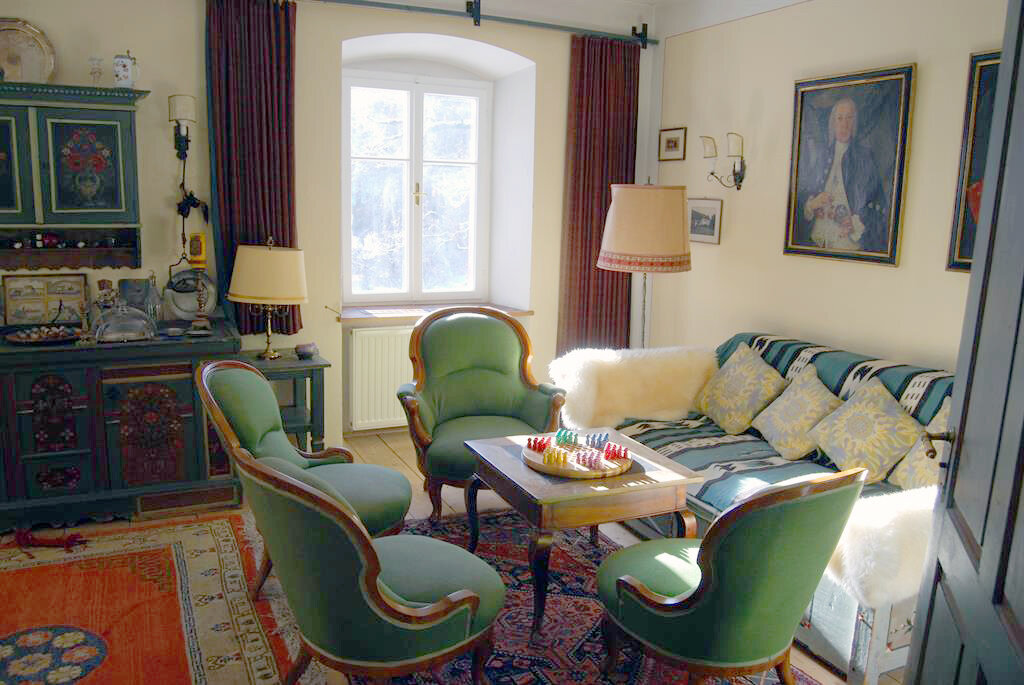
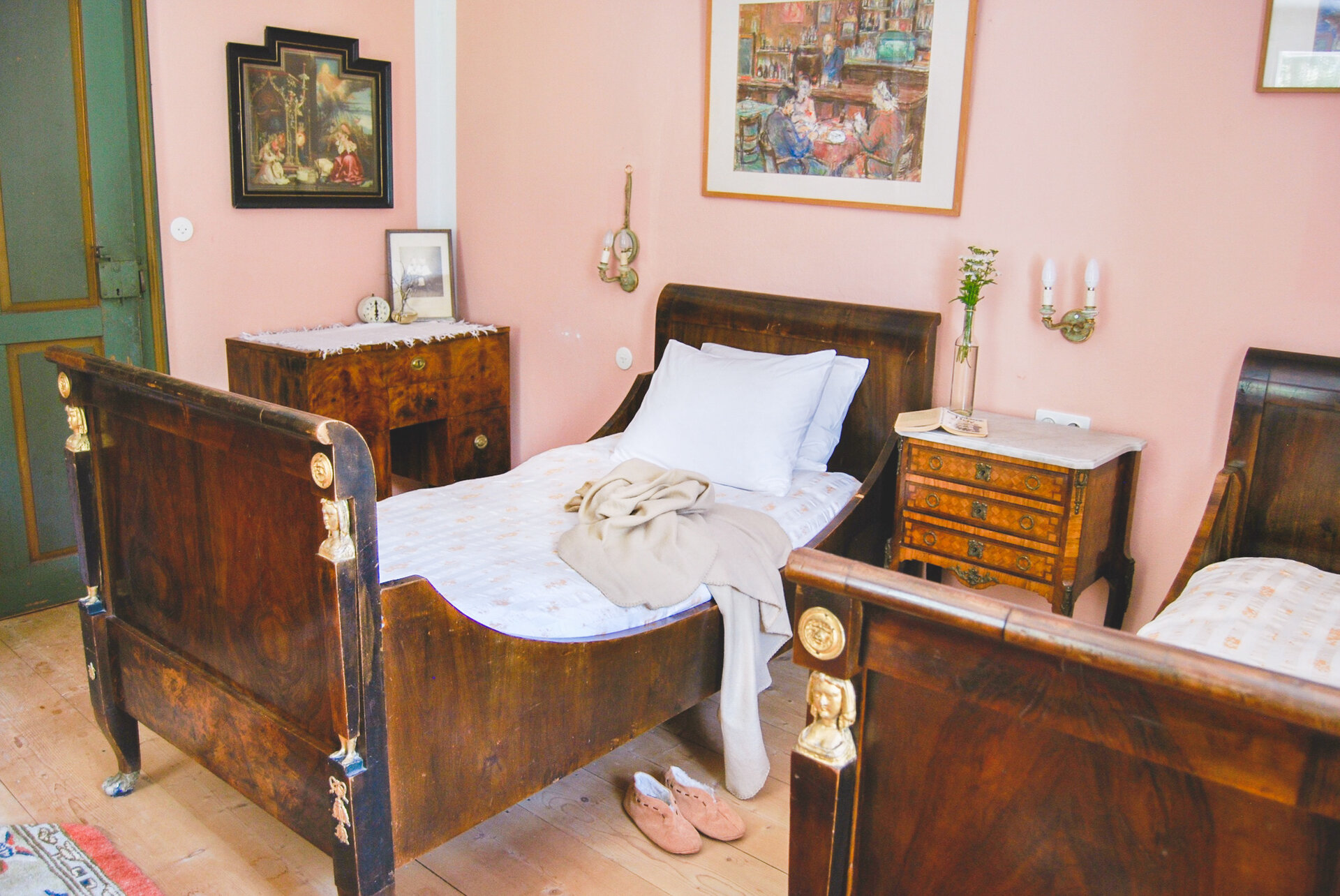
Inside the castle there are paneled rooms and tiled stoves from the Classicism period (1760-1830) as well as pictures of the former castle. Also noteworthy is the richly decorated wooden epitaph of Hans von Sarnthein from 1547, which was transferred from the village church of Sarnthein to the castle in 1919. Schneeberg Castle has remained with the Sarnthein family to this day. For some time (until the end of 2019), private rooms were rented out there, the rooms were lovingly restored and you could sleep in the "historic" beds.
Tip: Visits are only possible from the outside, so I recommend a leisurely spring walk along the "Unter'm Dorf" sun trail. This circular route leads directly past the castle walls. As a premium winter hiking trail, this route is also easy to do in winter and is very sunny around midday. More about the "Unter'm Dorf" sun trail in the tour planner: Click here
Sources:
1901, The Gschnitz Valley. In: Reise- und Fremden-Zeitung für Tirol und Vorarlberg, No. 18, p. 4
2009, Entry in the archive: Schneeberg, on www.burgen-austria.com
1996, Castles, ruins in North and East Tyrol, Beatrix and Egon Pinzer
1982, Tyrolean Castle Book - Wipptal, Oswald Trapp