Back when Hintertux was still part of Schmirn...
100 Years Since Hintertux's Separation from Schmirn—A Joint...

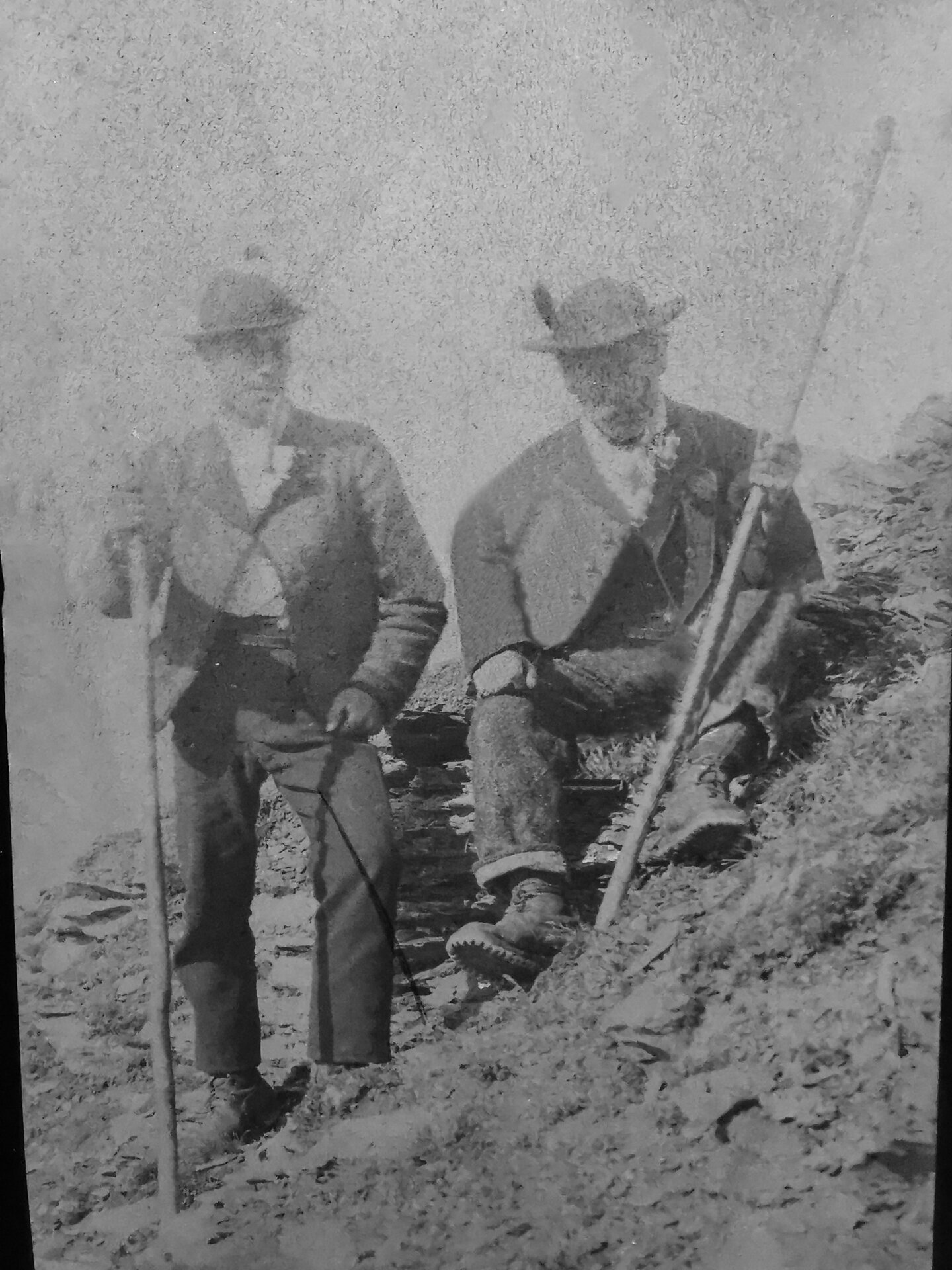
The Pittracher family from the mountaineering village of Gschnitz has successful mountain guides as ancestors. As early as 1772, a mountain guide by the name of Pittracher is said to have guided guests up the Gschnitz Tribulaun, although there is no written record of this. The mountain guide Georg Pittracher (1832 - 1893), who took part in the first ascent of the Pflersch Tribulaun, came from the same family. This blog is a first taste of the booklet "Alpingeschichte kurz und bündig - Das Gschnitztal" with interesting stories from the mountaineering village, which I will be presenting on June 5 in the mill village of Gschnitz.
Why work through the history of the Alps?
Each mountaineering village of the alpine associations is given the task of compiling the local alpine history within two to three years from the date of joining. The booklet is intended to provide guests with a deeper insight into the development of Alpine tourism in the communities and also offers the local population a better insight into the local history. I have taken on this honorable task for the Gschnitztal and have come across many interesting details and stories. I was also able to meet many nice people and experienced a lot of helpfulness in collecting old pictures and information, for which I am very grateful. The chronicle of the Pittracher family from the Feiserhof in Gschnitz was particularly valuable, where I learned a lot about the mountain guides in their family and their lives.
It all began with the foreign masters
In the mid-19th century, it was mainly guests from the upper classes who came to the Alps to escape the noisy and often monotonous life of the cities and climb the mountains in the fresh Alpine air. Traveling was expensive and time-consuming, and only the wealthy could afford it at the time. In Gschnitz, where alpine tourism first developed, these mostly male mountaineers were known as "foreign gentlemen". They often came from all over Europe thanks to the good rail connections. From the train station in Steinach, they either walked or took a horse-drawn carriage to Gschnitz. At the "Gasthof zum Kuraten" in Gschnitz - the only inn with rooms - the foreign mountaineers were able to spend their first night. The innkeeper - also the local curate - took care of the food and drink and informed the mountain guides in the village so that they could meet the men in the evening. Once the two of them had agreed on the tour and price, they would agree on the departure time for the following day.
One of the first twelve mountain guides in Tyrol
Georg Pittracher, born in Gschnitz in 1832, was a very successful mountain guide of his time and was one of the first dozen officially authorized mountain guides in Tyrol thanks to his skills and knowledge. According to a newspaper report from 1872, his working area included a total of 14 tours in the Gschnitz Valley, each of which was charged at a fixed mountain guide rate.
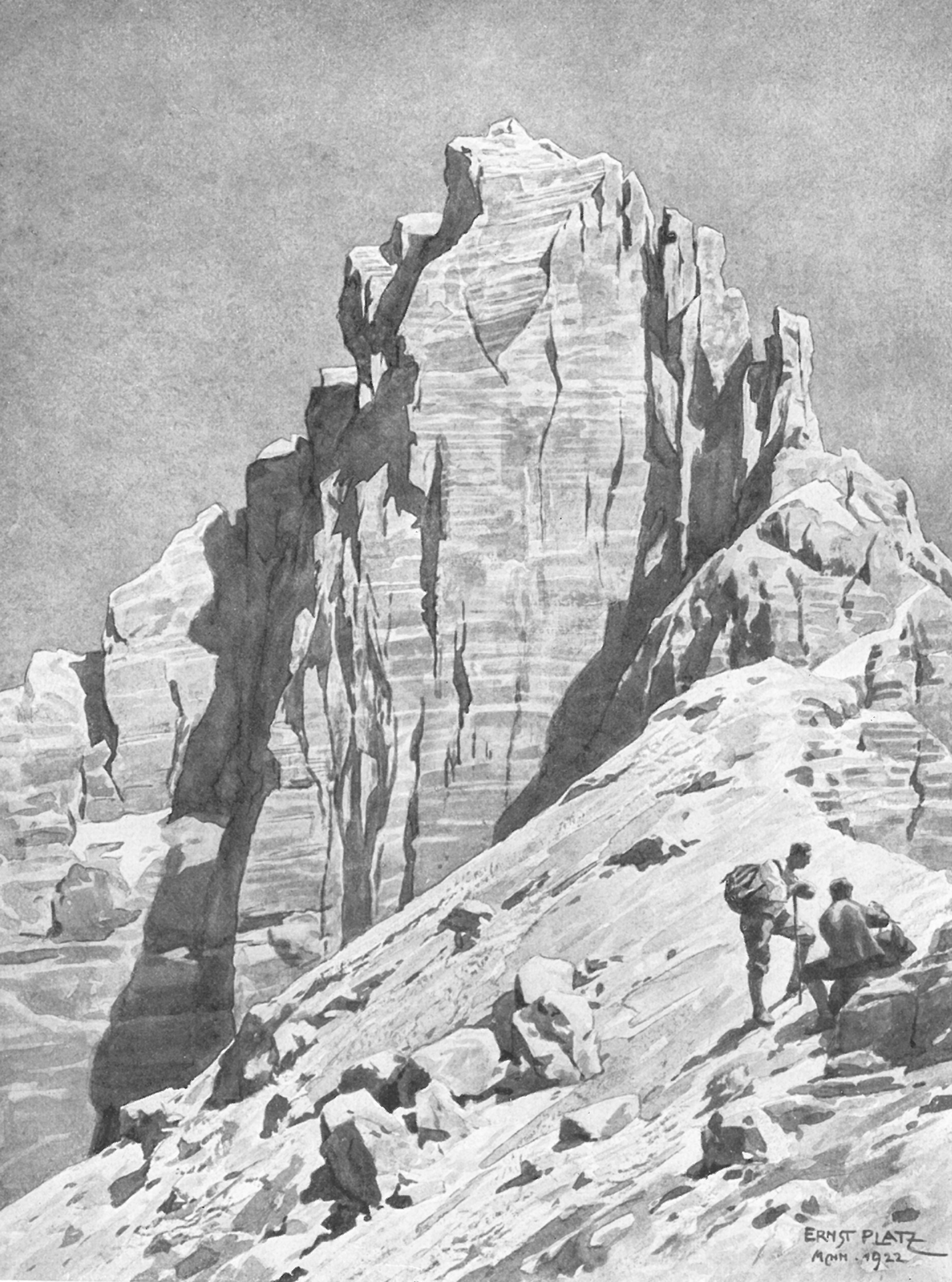
Pittracher was a strongly built, skilled mountaineer and succeeded in the first ascent of the lower eastern summit of the Pflerscher Tribulaun on September 6, 1872 together with Heinrich Waitzenbauer from Munich. He also set off with the climbing group on the first ascent of the main summit at 3,097 m on September 21, 1874, but was left behind just below the summit. The mountain guide Johann Grill (the Kederbacher) from Ramsau in Bavaria, Georg Hofmann from Munich and Nikolaus Winhard made it to the top via today's normal route. Georg Hofmann wrote a very lively account of this first ascent in 1875 in the journal of the German and Austrian Alpine Club. The exact reason why Pittracher did not reach the summit can be found in my booklet "Alpingeschichte Gschnitztal kurz und bündig". Shortly before his sudden death in 1893, the Gschnitzer celebrated his 40th anniversary as a mountain guide and the two hundredth ascent of the Habicht. Georg passed on his passion for mountaineering to his sons, two of whom also became mountain guides.
Tip: Take a look at the exhibition with historical pictures and in-depth information about the alpine history of Gschnitztal in the mill village of Gschnitz. The booklet is also available for € 4.00 from the municipalities of Trins and Gschnitz, the Wipptal tourist office and Tyrolia in Steinach.