Back when Hintertux was still part of Schmirn...
100 Years Since Hintertux's Separation from Schmirn—A Joint...

Insane NS project below the Alpeiner Scharte in the Wipptal mountains
From the mountaineering village of St. Jodok, branching off through the Valsertal valley to the tourist stop and a 3-hour walk up to the Geraer Hütte (2,324 m) brings us closer to the former mine. Another 600 meters higher, at 2,805 m below the Alpeiner Scharte, lies the closed entrance to the former molybdenum tunnel with its eventful history.
The Tyrolean cartographer Peter Anich described a molybdenum deposit there as early as 1774. For a long time, molybdenum (from the Greek for "lead") was not considered important. However, at the end of the 19th century, employees at a French steelworks noticed its unusual hardness, corrosion resistance and heat resistance. This gave molybdenum great strategic importance as an alloying element in steel coatings. At the beginning of the Second World War, the arms industry was cut off from molybdenum imports by an embargo. Due to the extremely important strategic significance of this raw material, the German Reich initiated the immediate development of new deposits in the Reich's territory. In a report for the Reich Office for Soil Research, the University of Innsbruck predicted a treasure that the German Reich could not do without, even if the high mountain region was very unsuitable for mining operations.
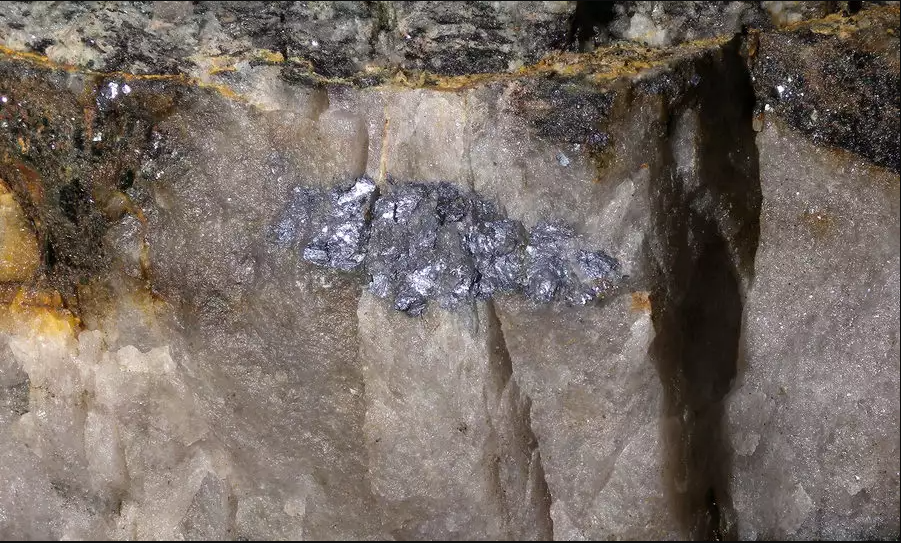
As a result, Treibacher Chemische Werke AG from Feistritz began exploring the Wipptal deposit in 1941. In 1942, the Tiroler Erzbergbaugesellschaft m.b.H., based in St. Jodok, was founded, and in 1943 the Sachsenerz Bergwerksgesellschaft m.b.H. from Freiberg took over a share in the Tiroler Erzbaugesellschaft. Based on previous surface explorations, the molybdenum deposit was expected to be 700 meters long, 400 meters wide and 350 meters high. This relatively small volume forms the pyramid of the 3117m high Alpeiner Schartenkopf. New infrastructure was required to develop the deposit. In addition to the tunnel, a 6 km long material cableway was built to the processing plant at the Nockeralm, a hydroelectric power station in the valley with a power line up to the mine and work barracks. The aim was to transport 50 tons of material per hour. Of the 140 workers, the majority were forced laborers from Eastern Europe alongside locals and Italians. The work in the high mountains was hard. In winter, walls of snow several meters high often had to be overcome. One foreman complained that 10 to 15% of the men dropped out every month because they were physically unable to cope with the rigors of the high alpine climate.
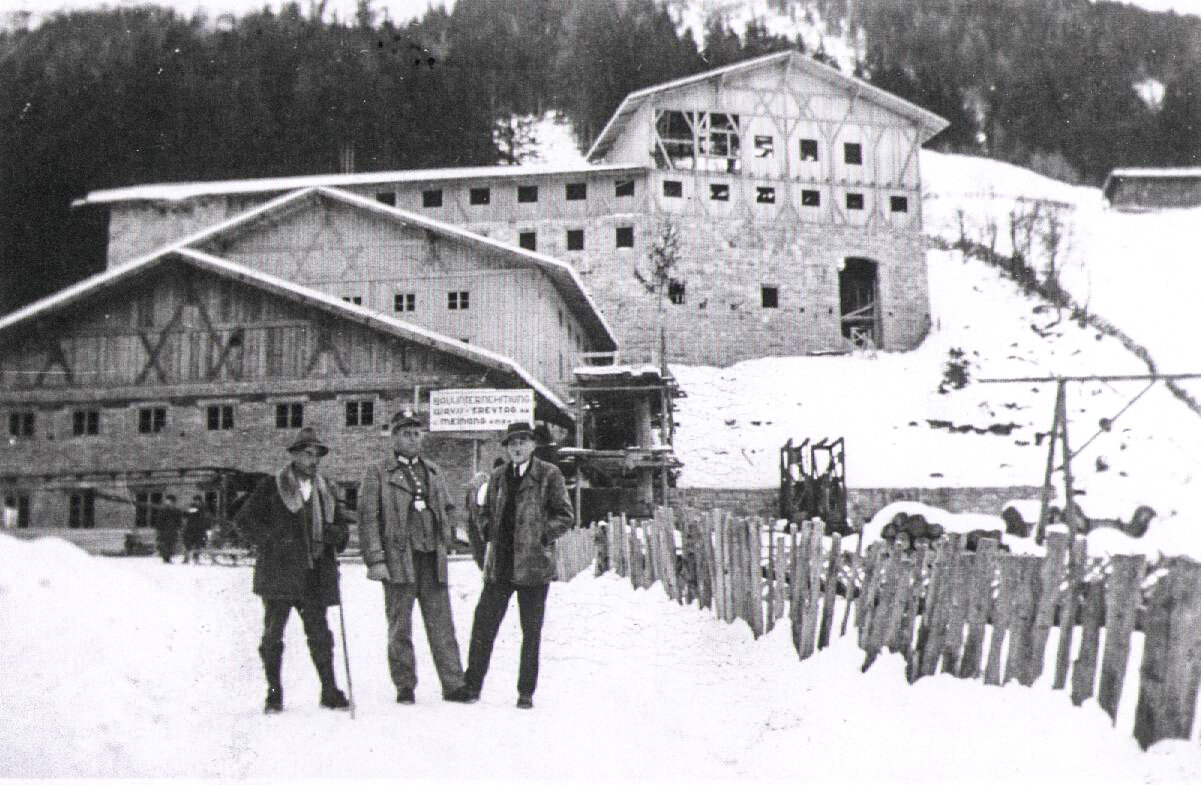
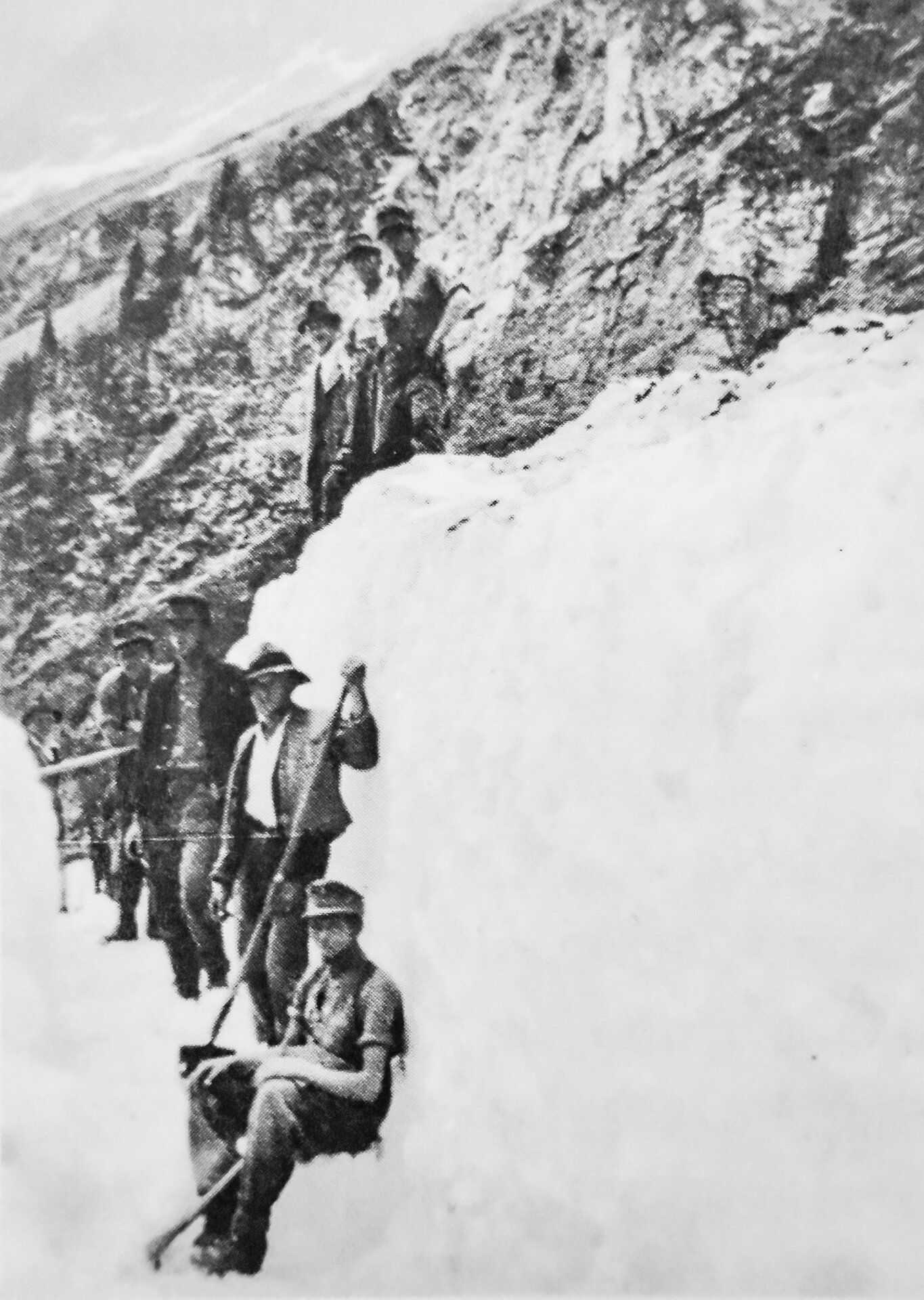
After days of heavy snowfall, an avalanche destroyed two of the three barracks of the workers' camp below the Alpeiner Scharte on November 11, 1944. 22 workers lost their lives. However, development operations continued almost seamlessly with new workers. The only barrack spared by the avalanche was occupied more densely and labor camp I, located further down the valley, was enlarged. Arrangements were made to accommodate more workers directly in the tunnel system, in an approx. 80 m² cavern. However, this was not to happen...
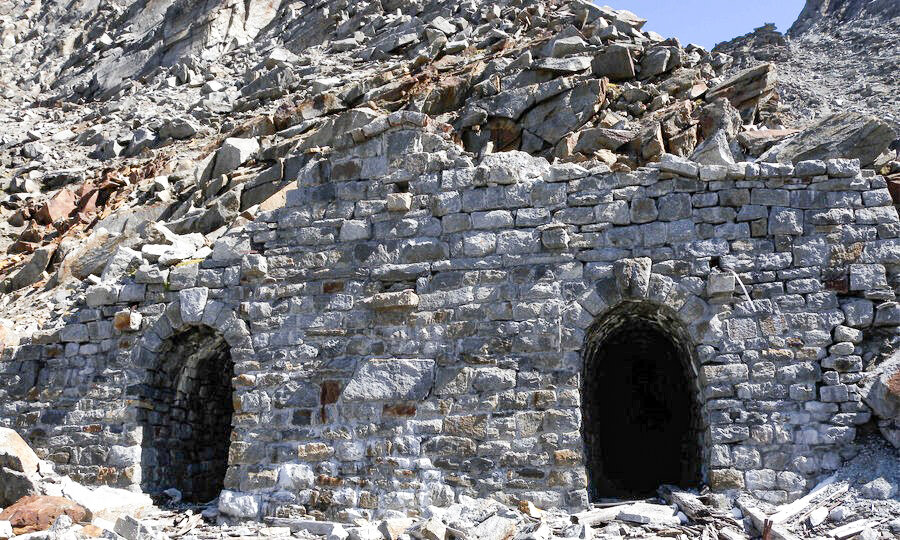
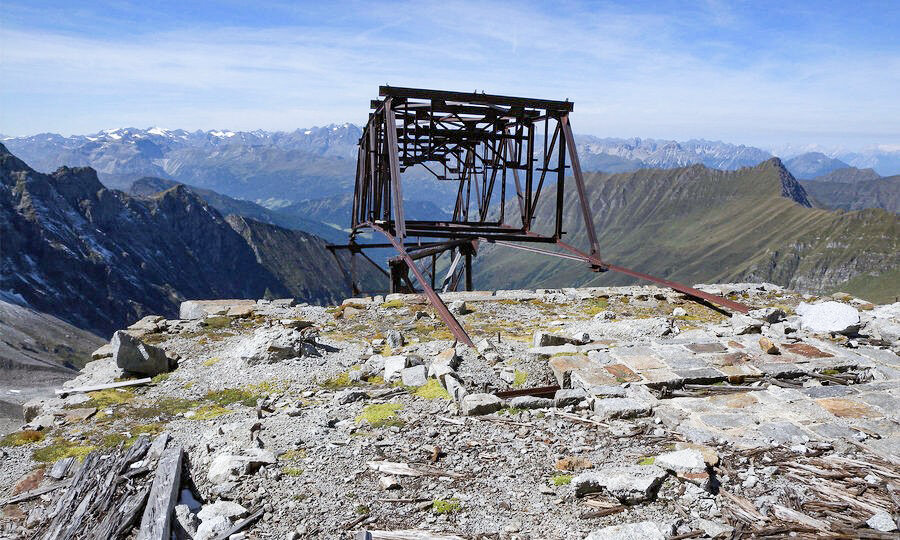
As the work progressed, it soon became clear that there was not even close to a large molybdenum treasure to be found at the Alpeiner Scharte. But before the actual mining of even the small amount began, the war was over. Not a single gram of molybdenum from the Wipptal ever hardened German steel. After the Second World War, prices fell dramatically, so that mining at the Alpeiner Scharte was completely closed. All usable equipment was removed and used at other mining sites. Today, only the closed tunnel system, the stepped leveling of the workers' barracks, the striking cable car scaffolding and the railroad track bear witness to the former mine. The processing plant at the Nockeralmen in the valley was blown up in 1989.
TIP: A detailed description of this chapter and other interesting historical details from the mountaineering village of St. Jodok/Schmirn/Vals can be found in the booklet "Alpingeschichte kurz und bündig" by Helga Beermeister - available from the TVB information office in Steinach.
Sources:
Helga Beermeister (2016): St. Jodok, Schmirn- & Valsertal (= Alpingeschichte Kurz und Bündig), Innsbruck. Online at www.bergsteigerdörfer.at
Florian Gasser (2010): Stollen für den Sieg, in: Die Zeit 29. online at www.zeit.de/2010/29/A-Bergwerk
University of Innsbruck (n.d.): The test mining under the Alpeiner Scharte. Online at www.uibk.ac.at/geologie/schausammlung_cs/alpeiner-scharte.html

